

Friday, May 6, 2016
Where do the boycotts stop?


Friday, July 17, 2015
Philip heals the eunich
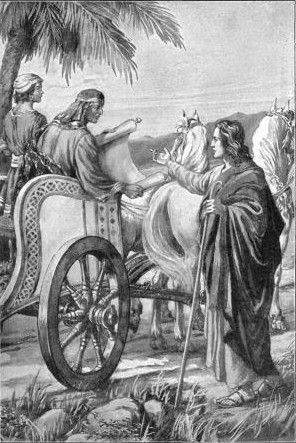
A.D. The Bible continues,
#11
"Tell them the good
news about Jesus." Acts 8:26-40
Intro…
Running into “JK”, giving his card to “Mike Hess…”
Big
Picture: (Common starting point) We need
to lead “Holy Spirit flexible lives” and then be willing to take action when he
calls.
Text: Acts 8:26-40 (10:9-16)
v.26 & 29
Listen to the voice of God.
·
This entire story emphasizes the leading of the Holy Spirit in our
lives, and especially when we are “witnessing.”
·
Remember, Philip was having a great, successful ministry in Samaria,
but he was obedient to God and went to the desert.
·
Sometimes as we listen to the voice of God, he will send us to the
desert before we come to the wilderness.
·
“Go over and join this chariot.”
·
Philip ran…
·
Because of Philip’s obedience to God, Ethiopia was now open to the
Gospel.
v.
30-31 Sometimes people just need an explanation.
·
Philip hears the Eunuch reading out loud from Isaiah 53… reading aloud
to oneself was the universal practice in the ancient world.
·
He at least knew the importance of seeking God through the scriptures.
·
Luke 24:25-27, Romans 10:12-15
·
Remember, he had gone to Jerusalem to worship so he had some knowledge
of God.
·
At this point, he was a Gentile who worshipped Israel’s God, but was
not yet a full convert.
·
And what a great passage to choose!
·
Isaiah 53 talks about the injustice done to Jesus that was eventually
played out in the cross and later witnessed in the stoning of Stephen.
·
Philip: “Do you understand?”
·
Eunuch, “How can I, unless someone guides me?”
Good
questions to ask when someone starts to investigate the Bible and Christianity.
·
So what do you think of all this?
·
What is your opinion on the supreme court’s ruling this week? (Then be
willing to actually listen…)
·
Do you have a Bible?
·
Can I give you one?
·
Let me know if you want to discuss anything from it.
v.
31b And he invited Philip to come up and
sit with him.
·
What a privilege when we are invited into people lives!
·
Montesorrie School grad. Yesterday…you bet I was going!
·
Boys and Girls club
·
Food distribution
·
ESL
·
When was the last time you were invited to a non-Christian event/house
etc.?
v.
35b “He told him the good news about
Jesus.”
·
Keep it simple.
·
Always talk about Jesus.
·
As the church is birthed, the gospel is now being made available to all
people, Jews and Gentiles.
·
Acts 10:9-16
·
This is Peter’s vision of how the gospel will spread to all mankind.
·
When you read all of chapter 10, you’ll notices that it is all about
the conversion of Cornelius, a Roman centurion, the first
Gentile baptized into God's church.
·
To those assembled in Cornelius' house, he says, (10:28) "You know
how unlawful it is for a Jewish man to keep company with or go to one of
another nation. But God has shown me that I should not call any man common or unclean.”
·
The vision of unclean animals was an illustration God used to help
Peter understand that salvation was open to those previously
held at arm's length (Acts 11:18).
·
The story of Philip and the Eunuch is a perfect example of that.
v.
36b What prevents me from being baptized?
·
“Look, there’s some water!”
·
Again, a sign of the HS being in this, water in the desert.
·
As a eunuch, he would have been denied access to the temple. (Mosaic
law, Duet. 23:1)
·
That also denied him the opportunity to become a full convert to
Judaism.
·
Yet God is on the move in his life and he is listening.
·
Yet we see in today’s story, when someone is ready, do it!
River
baptism at Seminary
·
For the eunuch in today’s story, baptism was the appropriate expression
for his commitment to Jesus, whom he had come to accept as the fulfillment of
Israel's hope and promised Messiah.
·
(and it’s still the same for us today.)
·
He identified with Christ whether there is one witness (Philip) or hundreds.
·
The fact that he was reading from Isaiah is significant because Isaiah
holds the promise that God grants devout eunuchs a heritage, “better than sons
and daughters.”
·
Isaiah 56:3-5
For
some people, there are other things that prevent them from being baptized.
·
We can help them see what it is that is actually preventing them from
coming to Christ and being baptized.
v.
39 “and when they came up out of the
water…”
·
That’s one of my favorite parts of baptism
·
Smiles, arms raised, whooping, tears, etc. here’s an example…
·
VIDEO CC baptisms
·
God is moving, present and powerful at a baptism
·
It’s a public profession of the power of God!
·
Salvation/baptism is an act of God, and the angel of the Lord who
directed Philip towards the Eunuch coincide with that.
·
v.39 the Spirit of the Lord
"suddenly took" Philip away.
·
The verb “harpazo” connotes both a forceful and sudden action by the
Spirit and a lack of resistance from Philip.
Oh…I
want that! We should pray for that kind
of HS power in our lives!
·
“forceful and sudden action by the Spirit” paired with “a lack of
resistance”
·
This was a powerful confirmation that Philip was God’s representative.
·
v. 40 Philip “found himself” at
Azotus.
The
Eunuch went from serving Candace the Queen, to serving God.
·
He had made a big commitment to the Queen.
·
Now he was making an even bigger commitment to God.
·
Because of this Eunuch’s position of power in Ethiopia, his conversion
brought the Gospel into the power structures of another government.
·
Acts 1:8, “But you will receive power when the Holy Spirit comes on
you; and you will be my witnesses in Jerusalem, and in all Judea and
Samaria, and to the ends of the
earth.”
·
The spread to Ethiopia, located in Africa, south of Egypt, is the
beginning of the gospel going to the ends of the earth.
· The eunuch’s conversion was
a significant episode in the advance of the gospel and that he "went on
his way rejoicing."
·
The account of the Ethiopian's conversion ends as it began—with a
stress on the special presence of God and his direct intervention.
Conclusion
What
can we learn from Philip?
·
Listen to/for
God.
·
Follow his
leading.
·
Don’t hesitate.
·
Start the
conversation from where they are.
·
Take an interest
in their life, their situation, their background.
·
Do your best to
explain the scriptures.
·
Accept the
invitation into other people’s lives.
·
Talk about Jesus.
·
Pray for their
conversion/baptism.
· Philip's ministry to the Ethiopian eunuch was arranged
by God and providentially worked out in all its details.
· God still works that way today…don’t ever doubt his
sovereignty.
Why this is important in
the birth of the church…
· The gospel is for every human.
· It will continue to spread throughout the world.
Have you been baptized?
Tabitha is healed

A.D. The Bible continues,
#12
"The healing of
Tabitha" Acts 9:36-43
Intro…
Headstone, “Tabitha, a disciple of Jesus, full of good works and acts of
charity. She is loved and mourned by the widows she cared for and provided
for.”
·
Got to meet with some good friends this week, our kids were young
together…now we’re navigating the teen years…we just want them to follow Jesus.
Big
Picture: (Common starting point) Like
Tabitha, Peter and Simon, God wants to do a mighty work in our lives. The
question is, “Are we willing, available and able?”
·
Tabitha, met practical needs through the sewing of garments.
·
Peter, used by God in a powerful way, (to raise the dead!) now beginning
to see how the gospel is for all people.
·
Simon, moving from unclean to clean in God’s eyes.
·
God’s power is evidenced in all their lives, as they are intertwined in
today’s story.
Text:
Acts 9:36-43
Today’s
story is set in the period of dynamic church growth that followed the
events of Pentacost.
v.
36…Tabitha
·
The original Greek text describes this woman as 'mathetria', a female
disciple.
·
This is the only time the New Testament uses this word.
·
There are three places where the words disciple or disciples include
women: Acts 9:1-2, 36; 18:24-26b.
·
We know there were lots of disciples of Jesus, men and women.
·
Yes, Jesus left the future of Christianity in the hands of the 12 men,
but he also had influence over women disciples who helped spread the gospel.
·
Jewish name; Tabitha, Greek name; Dorcas.
·
Both meant “gazelle.”
·
She was known for good works and acts of charity.
·
An admired member of the community, esteemed by all.
·
(Like the opening tombstone illustration)….Fill in the blank “_______________
was known for___________________________________________.”
·
Yes, God uses great preachers like Peter and Paul, but he also uses
“regular people” who are full of good works and acts of charity.
v.37 The 'upper room'
·
Acts 1:13
·
Upper rooms have a special significance in the Christian story.
·
An upper room was the scene of the Last Supper in Jerusalem, and it is
mentioned twice, in the story of Tabitha.
·
The upper room is a place that is removed from the “daily grind” of the
ground-floor courtyard and public rooms.
·
It is a relatively quiet place where contact with God might take place.
·
Do you have an “upper room” in your house or in your life?
v.
38 Peter gets called into action. (and he gets right to work)
·
These people were well aware of Aeneas's healing, (9:34-35).
·
So for them, it wasn’t too far of a stretch for this to be an extension
of divine power to raise Tabitha from the dead.
·
The widows are standing around weeping and showing the garments that
she had sewed for them.
·
Ritual mourning follows her death.
·
She has many friends, and they all wish to show their respect and
affection by openly grieving.
·
Mourning was not a restrained activity in the ancient Middle East.
·
People showed their grief by wailing, crying, and tearing the upper
part of their woven garment.
·
The more noise, the more the dead person was loved.
And
what does he do when he gets there? He
clears the room.
Got
rid of the distractions. (v.40)
·
As he had seen Jesus do in the case of Jairus's daughter, (Luke 8:51) he
ordered the mourners out of the room and prayed.
·
He’s not trying to show off or make a big demonstration.
·
He’s just talking with God, and commands in the name of Jesus this
woman to come back from the dead.
Knelt
down
·
respect/reverence to God…worship posture, standing, kneeling, arms
raised, some sort of physical reaction…
Facing
away from the body
·
focusing on God’s power
Prayed
·
trusting God for the outcome
·
Using her Jewish name (Tabitha)
·
He called out in confidence (and we need to do the same, trusting God
to heal or not).
It
is an 11-mile northwest walk from Lydda to Joppa.
·
By travelling there Peter is moving to the limits of Jewish territory -
further away from Jerusalem, which at that time was hostile to the infant
Christian church.
·
The journey is a reflection of his inner journey, as he moves away from
Judaism towards a new understanding of his mission…to reach non-Jews.
v.
41b She was presented alive.
·
The Greek word used for “raised up” is the same word used throughout
the NT for Jesus’ resurrection.
·
Tabitha’s healing serves to remind all Christians of our promised resurrection
in Christ.
When
God heals us, we are presented alive.
·
Whether that’s a physical healing, emotional or released from addiction
etc.
·
She is not only returned to life, she is returned to her community,
those she loved and cared for.
·
And that’s what happens when we are healed properly.
·
We go back to the ones who love us…
·
Tabitha took God’s commands about society’s most vulnerable seriously. “Do
not oppress the widow or the fatherless, the alien or the poor.” Zechariah 7:10
v.
42 And look who gets the ultimate glory,
God.
·
It was an amazing show of God's mercy and power, and "many people
believed in the Lord."
·
“Remarkable miracles lead to many more genuine conversions as the
gospel spreads.”
v.
43 Peter stays with Simon the tanner.
·
Why is this important?
·
Peter breaks down a cultural barrier by staying with Simon.
·
This was an important step for Peter in beginning to reach people who
were “not like him.”
·
Simon had customs that Peter didn’t necessarily agree with.
·
Simon “did things differently.”
·
Simon didn’t adhere to strict Jewish religious traditions.
·
Hmm…sounds like people today we all know…
·
“Yeah but they don’t act like Christians…”
·
Tanners were despised by Jewish society because they dealt with the
skins of dead animals.
·
(Simon lived in Joppa, by the ocean, 125 above sea level for breezes,
stinky animals…)
·
Most likely, Simon was shunned by the local synagogue.
·
Yet, that’s exactly who Peter chose to stay with…a great example.
·
Peter staying with Simon suggests that Peter himself was not overly
concerned with observing Jewish ceremonial traditions.
·
Gal 2:14, “When I saw that they were not acting in line with the truth
of the gospel, I said to Cephas in front of them all, “You are a Jew,
yet you live like a Gentile and not like a Jew. How is it, then, that you
force Gentiles to follow Jewish customs?”
·
Who are we shunning from our church, either on purpose or by accident?
·
No one should be shunned!
Why this is important in
the birth of the church…
· The healing of Tabitha is a pivotal moment in Peter's
life.
·
He and the first
Christians are inspired and amazed, and the infant Church spreads and grows
because of this miracle.
·
After this
amazing miracle, Peter realizes God has a much bigger role for him than just
converting Jews.
·
(From last week)
in Acts 10:9-16, Peter realizes he now is called to reach all kinds of people,
not just Jews.
·
This was one of
Luke's main points when he wrote the Acts; he was writing largely for Gentile
Christians.
·
This was a faith
confirming moment for these new Christians.
· God can heal anybody of anything, anytime.
Conclusion: It’s great to read about total healing as in
the case of Tabitha.
·
“Faith for my deliverance is not faith in God. Faith means, whether I
am visibly delivered or not, I will stick to my belief that God is love. There
are some things only learned in a fiery furnace.” Oswald Chambers in Run Today's Race.
Subscribe to:
Posts (Atom)